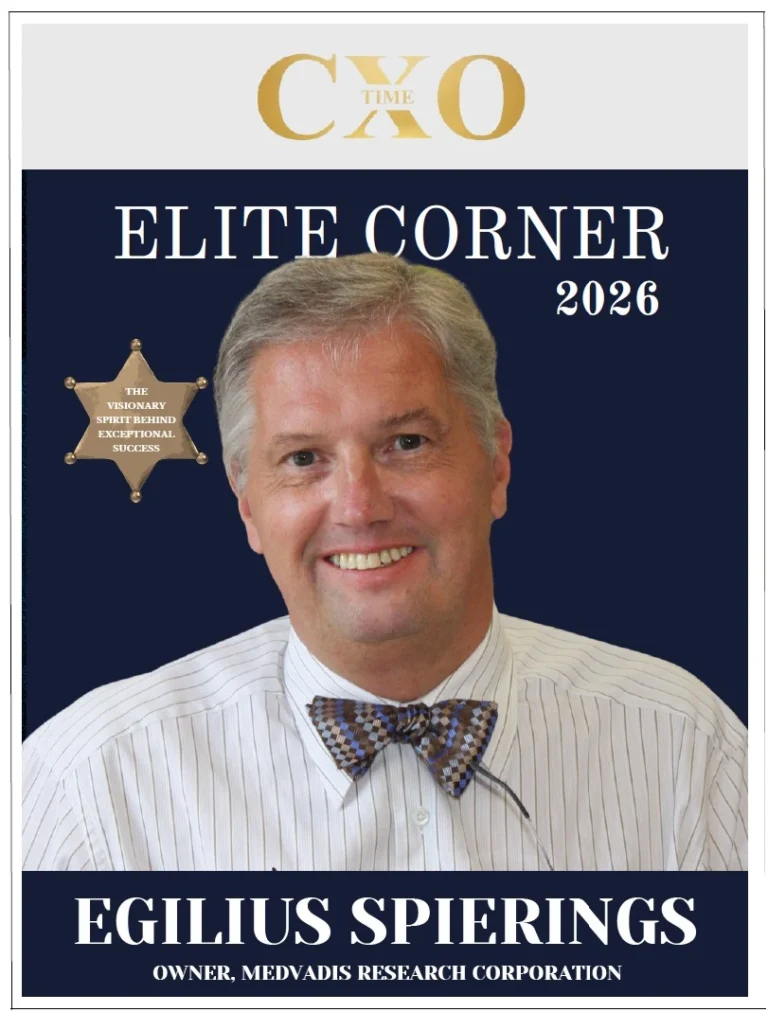
Egilius Spierings/strong>
Owner @ MedVadis Research Corporation
Egilius L.H. Spierings, MD, PhD: Advancing Headache Care Through Research, Experience, and Compassion
A Career Dedicated to Understanding Headache and Facial Pain
Egilius L.H. Spierings, MD, PhD, has spent more than five decades working to improve the understanding and treatment of headache and facial pain. His journey began with a moment of opportunity during his medical education in the Netherlands, but it was his dedication to the field that shaped the course of his professional life. What started as an interest in migraine gradually developed into an international career spanning clinical practice, medical research, academic leadership, and patient education.
On May 22, 1974, while studying medicine at the Faculty of Medicine of Erasmus University in Rotterdam, the Netherlands, Spierings attended a symposium on migraine. There, he met John R. Graham, MD, MACP, a respected authority in headache medicine. Their meeting proved to be an important turning point. Graham invited him to Boston to study under his guidance, an opportunity Spierings accepted that same summer. He returned several times over the following years, eventually completing a fellowship in headache management with Graham in 1981–1982.
This professional relationship helped shape his future. In 1986, Spierings was appointed as Graham’s successor as Director of The Headache Research Foundation, prompting his move to the United States. He also renamed the patient care division of the Foundation as the John R. Graham Headache Centre at Faulkner Hospital, which continues to exist today. From there, his career expanded across respected medical institutions, including Brigham and Women’s Hospital, Harvard Medical School, and Tufts University Schools of Medicine and Dental Medicine.
Alongside his academic responsibilities, he maintained an active private medical practice focused on headache and facial pain and operated a clinical-trial research center dedicated to migraine and chronic pain. Across these different roles, one purpose remained consistent: improving the lives of people who experience persistent and often disabling pain.
Leadership Rooted in Dedication and Compassion
For Spierings, professional success is closely connected to the quality of care provided to patients. His approach is guided by three qualities he considers essential: dedication, perseverance, and common sense. These principles have supported him through decades of clinical work, research, teaching, and institutional responsibilities.
He believes that people experiencing headache and facial pain deserve more than a medical response focused only on their symptoms. They need to be understood, treated with compassion, and given the knowledge and confidence to take an active role in managing their condition. His professional ideal is to provide the best possible care through understanding and compassion while empowering patients to make informed decisions about their health.
This approach reflects a broader view of medical responsibility. A physician’s role does not end with identifying a condition or recommending treatment. It also involves listening carefully, recognizing the individual experience of pain, and helping patients understand the options available to them. For Spierings, empowerment is an important part of effective care because patients should feel equipped to participate in their own treatment journey.
His years in academic medicine and clinical practice have also given him an appreciation of the importance of combining medical knowledge with practical judgment. His emphasis on common sense reflects the need to keep patient needs at the center of professional decisions, even in a field shaped by ongoing research and scientific developments.
Connecting Clinical Practice with Medical Research
A significant part of Spierings’ career has involved bringing clinical experience and medical research together. His work has focused on migraine and chronic pain, areas in which understanding individual patient experiences is essential to improving treatment approaches.
Through his clinical-trial research center, he contributed to the study of headache-related conditions while continuing to care for patients. This combination allowed him to remain connected to the practical challenges people face while engaging with research aimed at improving medical understanding.
His work across Brigham and Women’s Hospital, Harvard Medical School, and Tufts University Schools of Medicine and Dental Medicine further strengthened this connection between patient care, research, and academic medicine. His professorial appointments at Harvard Medical School and Tufts University reflect the academic recognition he received during his career.
For Spierings, research has an important purpose: it should contribute to better care and a clearer understanding of conditions that affect people’s daily lives. Headache and facial pain can interfere with work, relationships, personal responsibilities, and overall well-being. Addressing these conditions requires continued attention to both their medical aspects and their effects on individuals.
His career demonstrates the value of maintaining this connection between scientific investigation and direct patient experience. Rather than viewing research and clinical practice as separate responsibilities, he has built his professional life around their shared potential to improve care.
Overcoming Challenges and Building an International Career
Moving from the Netherlands to the United States in pursuit of an academic and medical career required Spierings to adapt to a new professional and cultural environment. Among the challenges he identifies, one stands out as particularly personal: English was not his native language, as his first language is Dutch.
Working in an English-speaking medical and academic environment presented an additional challenge, especially in a profession where communication is central to patient care, research, and teaching. Nevertheless, he continued to build his career, taking on responsibilities at leading institutions and establishing himself in the specialized field of headache medicine.
His journey also highlights the importance of professional relationships and the opportunities that can emerge from them. His meeting with John R. Graham in 1974 opened the door to further study, specialized training, and eventually a leadership position in Boston. However, sustaining that opportunity required years of dedication and a willingness to keep developing his knowledge and experience.
His appointment as Graham’s successor in 1986 was an important milestone, as was the establishment of the John R. Graham Headache Centre at Faulkner Hospital. His later academic appointments at Harvard and Tufts added further depth to a career that combined medical service, research, and education.
These achievements were built over time through consistent work rather than a single defining moment. His experience reflects the value of perseverance when professional ambitions involve crossing geographical, linguistic, and institutional boundaries.
A Continuing Commitment to Patient Education
Although Spierings has retired from academia and is mostly retired from clinical practice, his commitment to helping people affected by headache and facial pain remains strong. He hopes to continue reaching patients around the world through his book, HEADACHES: Why You Have Them – What You Can Do About Them.
The book represents an extension of the purpose that has guided his medical career. While clinical consultations and academic work allow physicians to share knowledge directly, a book can make information accessible to a much wider audience. It offers an opportunity to help people understand their conditions and consider what they can do to manage them.
Patient education is especially important in conditions such as migraine and chronic headache, which can affect people in different ways and often require ongoing management. Clear information can help individuals better understand their experiences and engage more confidently with their healthcare providers.
Through this work, Spierings hopes to extend his contribution beyond the boundaries of his former academic and clinical responsibilities. His focus remains on empowering people who suffer from headache and facial pain, wherever they may live.
Looking Ahead: Knowledge That Continues to Make a Difference
For Spierings, the next stage of his professional journey is centered on sharing knowledge and making his experience useful to others. His book provides a platform to continue contributing to headache education, even as he steps back from the daily responsibilities of academic medicine and clinical practice.
His career offers an important perspective on what sustained professional contribution looks like. It involves recognizing an area that needs attention, developing the expertise to address it, and remaining committed to the people who depend on that knowledge. From his early introduction to migraine research in Rotterdam to his academic appointments in the United States, his work has consistently returned to the needs of people living with pain.
His advice to aspiring professionals is equally direct: “Be truthful to yourself and listen to your heart.” The message reflects the personal values that have guided his decisions and helped him navigate the challenges of a long international career.
Ultimately, Egilius L.H. Spierings’ contribution to headache medicine extends across patient care, clinical research, academic work, and education. His experience demonstrates that medical leadership is not defined only by professional appointments or institutional achievements. It is also measured by the knowledge shared, the patients empowered, and the lasting commitment to improving lives.
About Us
The CXO Time Magazine is one of the leading global platforms for leaders and entrepreneurs to showcase their stories.
Reach us: info@thecxotime.com