President & CEO of Sympatico
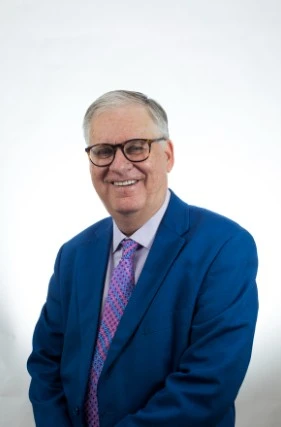
Wendy Taylor 0:08
Hi, Doctor Daniel. I hope you’re doing well today. Thank you so much for joining us. It’s truly a pleasure to have you with us.
Dr Dan Andreae 0:16
Well, thank. Thank you very much, Wendy. It’s a pleasure to be on with you and looking forward to a good conversation about different issues. But at any rate, I’m here in Toronto. Winter is approaching, not quite yet, but we’re getting closer there too. And honestly, I have to tell you, I prefer summer, however.
Ever. Canada’s a wonderful country too, so.
Wendy Taylor 0:36
That’s good. Yeah, that’s amazing. Thank you for that little fact. All right. So Doctor Daniel is an award-winning leader, globally recognized for his contributions to mental health education. As a CEO of Simpatico, he is at the forefront.
For advancing brain health, emotional well-being.
Dr Dan Andreae 0:57
Can I stop, by the way? Sorry, Wendy. Yeah, sure. Two things. Actually, you should mention my last name, Andre. It’s Doctor Dan Andre, not Doctor Daniel. OK, Doctor Dan Andre. That’s fine. And the 2nd is, is that I’m a professor. I’ve been a professor and everything. Everything you said is.
Wendy Taylor 1:01
Yeah, sure.
Yeah.
OK, OK.
OK.
Mm.
Dr Dan Andreae 1:17
Totally true. But the company is not Simpatico. In fact, that’s just my e-mail address. So I would just simply say that, you know, skip over the Simpatico thing. If I could ask you and just, yeah, just Doctor Dan Andre and and then we’ll go from all that. OK, sorry.
Wendy Taylor 1:19
OK.
OK.
Mm.
Yeah, we can. Uh, alright.
That is enough, all right.
Right. No problem. We can go over it again. Yeah. All right. So Doctor Andre is an award-winning leader, globally recognized for his contributions to mental health education. He is at the forefront of advancing brain health, emotional well-being, social impact.
Dr Dan Andreae 1:35
Let’s let’s go.
Good. Good.
Wendy Taylor 1:55
And human potential. So let’s begin with a few questions so that will help our audience to get to know you better.
Dr Dan Andreae 1:59
Sir.
Sure.
Wendy Taylor 2:05
All right. So, Doctor Andre, how was your journey? How did it begin? You know, what inspired you to dedicate your career to advancing mental Health and human development?
Dr Dan Andreae 2:18
Well, it goes back a long way, Wendy. And if I look back on my career to this point, and I look at the tapestry of life in my career, I can see threads that go through it that link all these interests together. My first job, actually, after a master’s degree in social work here in Canada.
I was hired with an organization, a health education organization, to set up the National Eating Disorder Information Center in Toronto at Toronto General Hospital, and that has to do with disordered eating, anorexia, nervosa, bulimia, binge.
Eating, among others, that are major problems under under the radar, so to speak. But many Canadians, coast to coast, suffer from some form of this, particularly among young women, but more and more among men, often younger people, but also throughout the lifespan. So there was a real need.
Fly people with information, accurate education and resources so they could get help about their particular issue. And so it’s still running. It’s 40th anniversary is this year and I followed it over those years, but it was a privilege to have been one of the co-founders from then.
I went on to become the first executive director of the Alzheimer’s Society in Toronto. Now, when I was offered that that position, it was really interesting because one of the things we did at this health organization.
That created Medic. We also put on conversational evenings at a major reference library in Toronto, Wendy and a good friend of mine, a mentor and a supervisor in Graduate School, said. Why don’t you contact the Alzheimer’s Society and do a joint evening on Alzheimer disease?
Well, if I’m being honest with you, I said, well, what’s Alzheimer disease? It was really in its infancy. And so I thought, well, this is an idea. It’s a brain disorder and people need to know about it, need to know there’s help somewhere. So I got on the phone and I called the organization.
Nice.
Can I speak to your director? And they said, well, actually we don’t have a director, we’re looking for one. So Long story short, I applied for that job and was very fortunate to get it. And I was surprised, to be honest with you, because I was probably 30 years old and the people interviewing me were.
Much older because Alzheimer disease tends to affect people age 65 and older. And so it was a great opportunity for me because it was a chance to once again to help people, not just patients, but the families and those caregivers who have to work with their.
Loved ones to to cope with a very insidious disease where the person eventually loses their memory, can’t function, has to be looked after, you know, 24 hours a day over a period of time. But it allowed us to start from scratch in a way, and we created a.
Counseling center, our resource center, support groups for families with working with public officials and allied health professionals to do advocacy to raise the profile of Alzheimer disease, to engage in a fundraising campaign and really to be.
There as a resource for people who needed that support and Alzheimer disease is is of course a major problem in our society today. It was emerging at that time, but Toronto actually Wendy was the very first society formed anywhere in the world. So that was a.
Great experience and and again tied into my passion to to help people, to empower people and to engage in public education too as well. And so those are my first two two major major positions. There are others that followed, but maybe you have other questions that can lead into that. So I’ll pass it.
Back to you, Wendy.
Wendy Taylor 6:38
That was amazing. That was so nice to hear. You know, the whole journey. Like you said, it’s you can see the threats as the phases in your life. All right, wonderful. So next question is that as a leader, you know, especially in this zone and space of health and Wellness, how do you navigate these rapid changes that we see now?
Dr Dan Andreae 6:46
Yes.
Wendy Taylor 6:58
Nowadays in science, technology, in public awareness, everything.
Dr Dan Andreae 7:02
Well, well, certainly technology is exploding and what we’re learning today in five years time may be outdated and new information will be taking its place. They say exponentially is the word. That means that things soar.
In in in the in the intensity of it and the advancement in in technology. So it is changing dramatically. Artificial intelligence for example, and it’s an issue we have to look at carefully because there are many, many advantages but also ethical concerns.
As well with making sure that we don’t lose control of it, so to speak. But in terms of medicine and health care, it means that we can collect data much more efficiently. It means more accurate diagnoses. Things that couldn’t have been done before can be done much more quickly.
And again, drug discoveries, it could take years to discover a drug for some condition. And now we know through artificial intelligence that process can be expedited and made much more quickly. And so there are patient advantages to it, of course.
And the systems advantages to hospitals in terms of increasing the accuracy and the speed of care. Another area too as well that I’ve been involved in is the area of robotics. Now it’s not my, as they say, it’s not in my wheelhouse, but it’s something that I came.
In touch with, oh, a few years ago, and I thought to myself, robotics and robotic surgery really seems to be the future of medicine or an important part of medicine. Well, I have to tell you a story here when I thought of maybe supporting this philanthropically, how to begin with it.
How to get it off the ground here at the Toronto hospital, the UHN, the University Health Network, which actually has been designated by Newsweek magazine as the third best hospital in the world or hospital system. So I approached doctors and medical people and I said.
This really seems important. Is there any way that we can get this off the ground? And you know, Wendy, it was quite surprising to me the amount of resistance and blowback I received and I would hear things like, Gee, it costs a lot of money.
Well, there are other priorities in the hospital here, and the government probably won’t support it anyway. So it took a while to convince people to embrace it. Well, with my help starting out and other people joining, the hospital system bot what’s called a Da Vinci robot, and this is a robot that helps.
A surgeon in the operating room, but can do things that were unthinkable 10 years ago. For example, an incision for an operation can be very, very small. You find that there’s much less blood loss, there’s less infection, there’s less recidivism.
Meaning people returning back to the hospital. People are out of hospital more quickly. It’s more efficient for the hospital in terms of treating more people. The benefits are absolutely manifold, and I’ll mention one other little vignette here.
There’s a world famous doctor here in Toronto, Dr. Yasafuku. He’s he’s wonderful. He’s a thoracic surgeon, mean he’s involved in in lung surgery in the whole chest area. And he told me recently a woman came to see him and said, Dr. Yasafuku, I’ve been to different surgeons in Toronto.
And I need to have a long operation. But these surgeons have told me they’re going to have to cut me from the back to the front. A huge scar. But I hear with your da Vinci robot, you can do it with a very small incision and I’ll be out of hospital more quickly. Well, he operated.
On her, he did what he said he could do and she was out of hospital more quickly. So there are advantages to this. I think the whole thing with technology, which we’ve addressed here a little bit, is that technology is 1 wing of the plane. The other wing of a plane is to do with patient care and with humanity because.
Everything we do when we think about it in healthcare and medicine is all around helping the patient, making the experience easier for them, recovery easier as well. And that’s what it’s all about.
The welfare of the patient. So I always look at these things together. We have to realize we’re there for for people and people are human, have their own feelings and their own experiences and we have to work with them. And we also know as an aside that when patients are.
Feeling involved. They’re feeling appreciated. They’re feeling valued. They’re feeling listened to. Actually, there is medical evidence that they heal more quickly.
Wendy Taylor 12:13
Oh, that’s wonderful. That’s actually really fascinating. And also the fact that, you know, you work at this, I could feel that at the intersection of innovation and empathy. How do you build trust though? Like, you know, how do you build that compassion and a shared vision with your teams?
And within the communities that you serve within your workspace.
Dr Dan Andreae 12:33
Well, it’s it’s a very good point and and certainly people work in teams and to me it all comes down to the human experience. And so people in any healthcare team or or medical team, they have to be listened to. They have their opinions and their ideas of which they have many.
To be incorporated as well. There has to be an ethos or a focus on empathy as well. That’s important to have as part of the whole system. And so it takes time to develop these aspects, but patient centered care.
Is what it’s all about. And so sometimes it’s a matter, Wendy, of education, of holding seminars and and focus groups and groups to talk about some of the stresses that people in health care go through so they can have a chance to be.
To be sharing their experiences with their their fellow health care workers. So it’s a multi pronged process and it needs to be looked at along the way. You don’t do it once and then it goes away. You need to keep on making sure it’s a focal part. It’s a fundamental part of your.
Healthcare approach from your mission to your mandate and and make it as as evident as possible through your own particular leadership.
Wendy Taylor 14:03
Wonderful. Which makes me actually curious about what upcoming project or initiative that excites you the most in 2026?
Dr Dan Andreae 14:12
Well, yes, a couple of them. One thing is that once the robot was was purchased, that was a few years ago, other robots were also purchased and this allows surgeons to do remote surgeries even in other places in the world. It’s amazing from here in Toronto.
But my sister, her name is Trish Holt Hornsby, and I decided that education, of course, is a fundamental part of anything that I’m involved in. And it’s really important to train these surgeons who will use these robots on the on the leading edge techniques that are developing.
All the time. So the two of us created the first in Canada Robotic Training Academy at the Michener Institute here in Toronto as part of the University Health Network and and now it’s thriving and and medical professionals and allied health professionals are coming there to learn.
The latest techniques, as I say, and and to share information with each other. And so building that is absolutely key and also linking robotics and artificial intelligence together, which they’re in the process of doing now at the UHN.
Is is very, very important. Also, as I mentioned about education, the Michener Institute is a gem of a organization and part of this quite large university health network. It is the educational wing of the of the institution and so.
To me is the foundation upon which innovation and change and progress occurs. So recently I was fortunate enough to have created there a new chair. That’s an academic position, but it’s a Doctor Daniel C Andre chair.
Of transformative healthcare education. And so this organization, which is Michener Institute, is the only one in Canada doing this, so to speak. And so if you get a degree from Michener in one of the healthcare disciplines like.
Anesthesiologist, technologist or genetic testing specialist. And there are a whole number of these, these degrees you can get there. Probably if you’re practicing anywhere in Canada, you’ve been trained at the Michener because it is a leading center. So I think it’s ready to.
Take its model, which is unique, take it across Canada and even internationally because there are countries I know that are interested in adopting the Michener model and how they approach education. So that’s that’s another area that I’m watching develop and am very excited about.
And and Wendy, we haven’t talked a lot yet and I I’ll carry on here a little bit about education in terms of schools because at one point I went, yeah, I went back to get my my doctorate in education at the University of Toronto and began teaching and that was about a twenty-five year career teaching.
Wendy Taylor 17:13
Yes, please.
Dr Dan Andreae 17:24
Yeah.
45 different courses actually at universities like the University of Waterloo and the University of Guelph-Humber here in Toronto and at college. And I love, I love doing that. And for me, working with students is such a pleasure and and I say it because.
Over the years, I’ve tried to figure out what makes for a successful class, and I think I found the answer to that. It’s creating a safe atmosphere in the classroom when students feel that they’re being listened to and taken seriously and they’re included in the process generally.
It works out a lot better. Certainly if you start a class, let’s say in September, for the first few weeks, students are are checking you out. You know, they’re getting used to the format and what’s required. But I’ll tell them you learn from me. I’m the professor, but I learn from you too, and you learn from each other.
And so giving them that permission after a few weeks, like a flower or water is added to it, they begin to blossom. And it’s been so rewarding to watch that happen. You’re not going to reach every student, but if you can spark an interest in them by making.
What you’re teaching relevant to them so they can relate to it in their own lives. I was called for years a pracademic, PRAC, and a pracademic is an academic who likes to apply the knowledge to solving problems. And so for me, education is really.
When the head meets the heart, OK, it’s not just above the Adam’s apple, OK in the brain. It’s when it makes sense to people and uh, and they can they can use it and uh and grow from it. So those are things that I’ve I’ve learned over time and uh and so I um.
Yeah, I find each class is different. Of course, each student group is different. I’ve taught a lot of psychology, health courses, bioethics and humanity, and even political science. Because I’ll tell you, when you look at healthcare, it isn’t just the biology of the body. That’s very important. Of course, you need to know how it works, but there’s so.
Much more. You have to understand psychology and emotions because our mind and body are really joined in so many ways. And one of the things about medicine, it’s wonderful. We know how it saved lives, vaccinations and operations and drugs. Medications have been.
Wonder.
But the bottom line is that there are other factors, such as where you live, whether you have access to healthcare, education, a self safe community, whether you have a job, what are your relationships like with your family and friends? All these things play.
Huge role. And what’s the policy that a government, you know, advocates and puts in place toward health care? That also plays a role. So you’re talking about many, many different things that make up the package of what we call health care, or certainly in many cases, unfortunately.
Fortunately, is sick care because, you know, we go to a doctor when we’re ill, when we’re not well. And by the way, statistics show that between 60 and 80% of all visits to a primary care physician or a doctor are to do.
With stress. So how we manage our stress is very, very, very important because again, it can not be a cause of illness. That would be an exaggeration. It’s what’s called a co-factor, meaning it’s one factor of many that can lead to a certain condition and so the.
More we know, the more that we can advance our knowledge.
Wendy Taylor 21:23
Well, that’s great. I am really grateful to you for bringing that up. Now actually coming to one of the most asked questions on our podcast, what is one piece of advice you would often give to young leaders, students or even professionals who want to make?
Dr Dan Andreae 21:36
Yeah.
Wendy Taylor 21:43
An impact in mental health and human development like you have.
Dr Dan Andreae 21:47
Oh, well, thank you. Yeah, I think there are many people that want to build a career. So I say, you know, follow your passion, but also follow your your talents because you may want to do something, but maybe you’re you’re better suited for another aspect. Somebody may want to do research in in healthcare medicine.
That’s wonderful, but maybe they’re better suited to be a counselor or a clinician, as they call them, working directly with people. So to really look around and find out where your skills lie and again, where your passion lies and recognize that at school you will be learning the skills that will hopefully.
Carry you through a lifetime, but recognize, as I mentioned earlier, that knowledge changes all the time. And so really in the end you’re getting a base in your field, but you are a lifelong learner because again, what you learn today may be out of date in a few years or.
Will have changed dramatically. You know, let me give you a couple of examples here. If you were studying neuroscience, the brain 20 years ago, not that long ago, but long enough, you would have been taught that the brain after a certain point does not change. It stays as it is and it’s inflexible. And when you.
Get older, you lose brain cells and then it’s a downward, you know, path from there. We know it’s upside down now. We know it’s not true. We know that the brain is capable of rewiring itself. Even as you and I are doing this podcast, your brain is active. Your 86 billion neurons are active.
In rewiring, it’s phenomenal. We know on an applied level you can work with stroke victims, retrain parts of their brain compensate for lost parts of the brain, and that person can make some degree of recovery. We know that neurogenesis occurs. Big word.
For the fact that, you know, new neurons can be created in parts of the brain, like the hippocampus, which is responsible for memory. And when you’re under tremendous stress or you’ve suffered trauma in your life, the hippocampus can shrink due to stress, but it can also develop new neurons when somebody receives treatment.
Or support. So that’s a wonderful breakthrough. One more quick one here has to do with genetics. And if you’re studying genetics again 20 years ago, you learned and correctly so that you have genes and genes determine, you know, characteristics in your in your body and your hair color, your eye color.
You know, other features, and these genes are part of your DNA, which is the blueprint for life. Anyway, there’s a sequence of those genes, and you were again told there can be mutations, yes, that can cause certain conditions, but basically the genes are there through life as they are. Well, it’s.
Been discovered in the last several years is there’s something called epigenetics. Well, what is epigenetics? Well, it’s a layer that lies above your genes. OK, it’s important because it actually is what determines which genes of yours are turned on and.
Off like a switch. And so it’s determined by so many factors and they’re just beginning to discover what those are. Things like what you eat, where you live, what are your interests, who are your friends, what do you like to do? Things that we don’t think of being medical or health related, but some are of course.
And so you could actually have a predisposition to a medical condition, but if it doesn’t interact with your environment and with genetics, nature and nurture, so to speak, that that gene may never be turned on.
Turned on, rather, in which case you may never get that particular condition. Somebody in your family, an identical twin who leads a different life than you, they may, through their epigenetics, have that gene, you know, turned on and they will get the disease. So it’s very complicated, but it’s very exciting to see how things change. So again.
Those are important things to recognize. Finding a mentor is also really important. I had a wonderful mentor, Dr. Eva Phillip, in Graduate School who believed in me, and that was an important time in my life. And so mentors very often want to give advice. I know being a professor that students are often.
Afraid to come to see a professor because they’re so busy or they won’t be interested. But I can’t speak for everybody. But I certainly was and many and many are. The last bit of advice, Wendy, I would give would be that to recognize and finding out what you don’t want to do.
Is just as important as finding out what you do want to do. And it’s often a process because I would often have students come to me and say, Oh my God, I wanted to go into Cancer Research and I don’t want to do that now. And or it could be mental health issues, whatever. My life is over and it isn’t because.
It’s a process as you come to realize where you fit in. It’s like being a sculptor and there’s a slab of marble in front of you and you’re actually chipping away and creating who you are. And that would be, you know, something everybody has to, I think, to recognize. There are moves forward and then some steps back.
That’s a normal thing and and the other part again is self-care, the importance of looking after yourself, not being harsh on yourself, having a support group or friends that you can talk to and and again to nurture that part of yourself because if you don’t share.
Your vulnerabilities and ask questions. It’s easy to think you’re the only person in the world that is feeling that way, when I can guarantee from my experience in various areas, it’s not the case. Many people and many students are having the same anxieties as you are, you know, when students come into a class.
Going back to teaching for a moment here, I know they come in as human beings. They come in with their hopes and dreams, but also their anxieties and doubts. We’re all human and you know, we need to acknowledge that, express that, embrace that and and and work with it.
Wendy Taylor 28:23
That was absolutely wonderful. Thank you so much for joining us today, Doctor Andre, and it was truly a pleasure hearing your insights and learning more about your remarkable work, but also the advice part that just really touched my heart and I’m sure it’s going to be the same for the audiences as well.
Dr Dan Andreae 28:41
Well, thank you very much. If people can take away something that’s helpful to them, all the better. I’m I’m delighted. It’s really nice to meet you, Wendy. Thank you so much.
About Us
The CXO Time Magazine is one of the leading global platforms for leaders and entrepreneurs to showcase their stories.
Reach us: info@thecxotime.com